
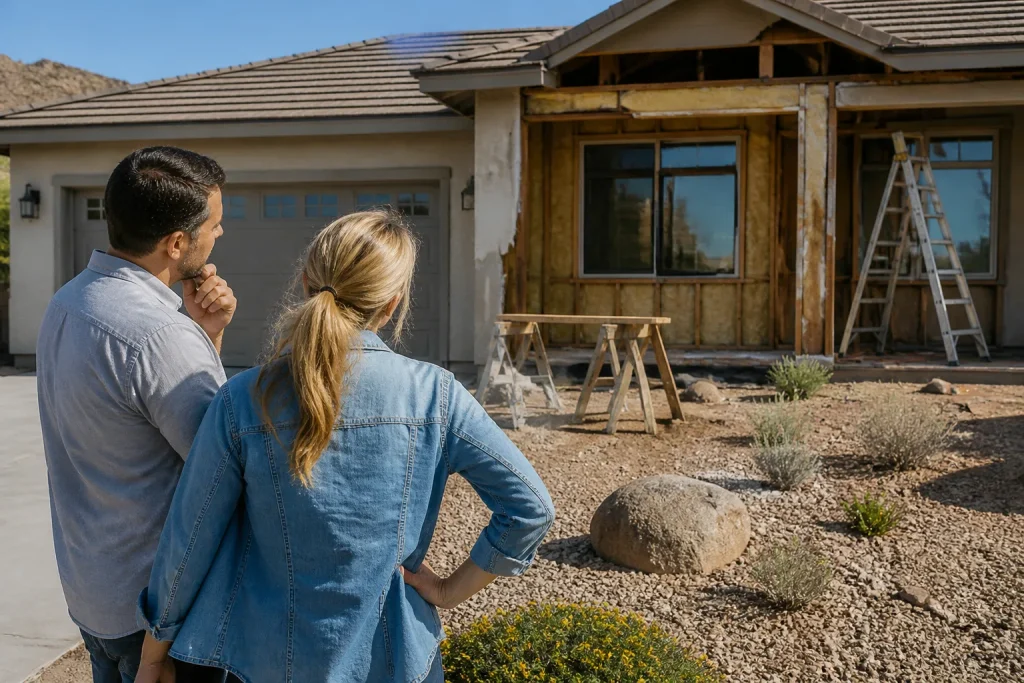
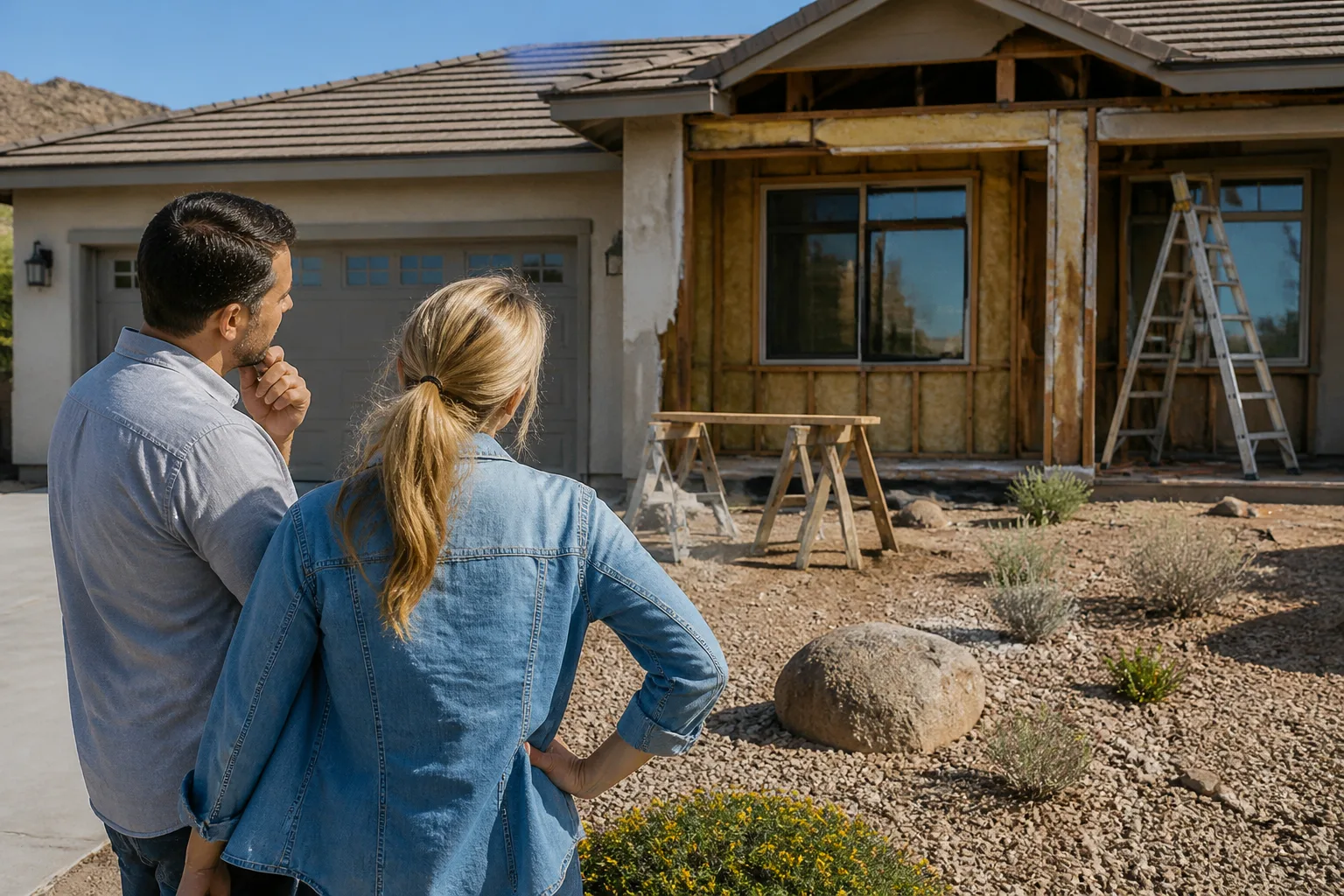
Home Remodeling: Repair or Replace? How Whitney Homeowners Decide
If a repair costs more than half of what replacement would run, and the system is already past the halfway point of its expected service life, replacement usually wins. If the repair is well under that threshold and the underlying cause gets fixed, not just covered up, repair is the smarter money. Everything else is a judgment call, and the Whitney homeowners who make it well are the ones who work the numbers before a contractor walks through the door with an opinion.
Why You Need Your Own Criteria Before the First Estimate
A contractor who recommends full replacement on the first visit has a revenue incentive you should account for. A contractor who immediately recommends repair may be dodging a conversation about the structural issue underneath. Neither reaction is dishonest on its face, but both deserve scrutiny. The protection is arriving with your own decision framework already in hand.
In our experience across Whitney, the homeowners who get talked into the wrong call fall into two camps. One group over-spends on replacement when a targeted repair would have bought another six or seven good years. The other group accepts a cheap patch that masks a problem and then pays for the same failure eighteen months later, often at a higher price because the damage spread.
Whitney sits in a high-desert climate, and that shapes the math in ways coastal or midwestern guides never mention. Low humidity slows rot on wood framing and siding, so repair often pencils out here where it wouldn’t in a wetter region. But the same dry air, combined with intense UV and summer heat that regularly pushes past 100 degrees, ages roofing membranes, sealants, and exterior paint faster. That cuts the other way. The repair-or-replace call in Whitney is genuinely local.
The Four-Variable Framework That Actually Decides It
Run these four variables and the answer usually falls out on its own. If two or more point toward replacement, you have your answer. If most point toward repair, authorize the repair but insist on a written scope that names the underlying cause.
- Remaining service life. A roof with 3 of its 20 years left doesn’t deserve a $900 patch. A 7-year-old water heater that’s already past its expected lifespan is a different story. Know roughly where the system sits in its expected life before you price anything.
- Repair cost as a percentage of replacement. This is the 50% rule in plain form. If the repair runs more than half of replacement, replacement almost always wins on a 7-year horizon. If the repair is 20% to 35% of replacement, repair is usually the right call.
- Does the repair fix the cause or just the symptom? A new shingle over a flashing failure that keeps letting water under the field is a mask, not a fix. A repair that addresses the actual intrusion point is money well spent.
- Resale premium. Whitney’s market rewards documented, updated systems. A replaced roof or a properly permitted remodel with paperwork behind it carries weight at appraisal and at negotiation. A patch with no documentation doesn’t move the needle.
When the 50% Rule Applies (and When It Doesn’t)

The 50% rule says: when a repair costs more than half of replacement, replace. It’s a shortcut, and it holds up more often than it fails. A $4,200 repair against an $8,000 replacement is a replace. A $1,800 repair against an $11,000 replacement is a repair, and anyone pushing replacement there needs to explain why.
Where the rule breaks down is when a repair carries hidden cost. On a Whitney roof, a repair quote that looks like 30% of replacement can balloon if opening the deck reveals deteriorated underlayment or a failed valley detail. That’s why the written scope matters more on a repair than on a replacement: replacement is a known quantity, repair is a range. Get the range in writing, including what happens if related damage turns up mid-job.
The rule also doesn’t apply when the existing system is already at the end of its service life. Spending 40% of replacement cost to squeeze two years out of a system with one year left is false economy, even though the percentage says repair. Service life overrides the dollar math every time that conflict appears.
On exterior work like windows and doors, brand specification matters to the math. A repair-grade patching job on old single-pane aluminum is often throwing money at something that needs to go to Therma-Tru or ECO Window Systems replacement units instead. When the substrate itself is the problem, replacement wins and the 50% rule becomes irrelevant.
How Whitney’s Dry Climate Shifts the Repair-or-Replace Math
Wetter regions tip toward replacement more often than Whitney does, and the reason is simple: moisture intrusion drives rot, and rot spreads until repair is no longer an option. Whitney’s low humidity means wood framing behind stucco and siding tends to hold up longer than the same framing would in the Pacific Northwest or the Southeast. That gives repairs more room to work here.
The counterweight is UV and heat cycling. Roofing shingles and flat-roof membranes in Whitney take a beating from sun exposure that shortens their service life relative to what the manufacturer’s generic estimate suggests. Exterior paint and caulk joints fail faster. HVAC condensers run longer, harder summers, which means compressor wear accumulates at a faster rate than the same unit would see in a milder climate. We’ve seen condensing units over in the older parts of Whitney that were rated for 15 years and were showing real decline by year 10, purely from run hours.
- Roofing: dry climate means decay is slower, so repair is more viable. UV aging means the shingle surface fails faster, so the repair window is narrower.
- HVAC: high run hours push toward replacement at an earlier calendar age than a mild-climate guide would suggest.
- Exterior siding and trim: repair holds up well when the substrate is sound, but James Hardie replacement makes more sense once water damage has crept past the surface.
- Windows: dry air doesn’t drive seal failure, so a fogged double-pane is usually a unit-replacement decision, not a full-window replacement.
If you want to go deeper on how those individual decisions play out inside a project, our page on General Contractor in Whitney covers how we scope work across trades, and the Kitchen Remodeling in Whitney page walks through the specific repair-versus-replace calls that come up in kitchens.
Why a Written Scope Matters More in a Repair Than a Replacement
Counterintuitive as it sounds, a repair is the higher-risk transaction of the two. Replacement has a fixed scope: you’re buying X, installed. Repair has a defined starting point but an open middle, and the phrase “related damage found during work” is where the surprises hide. That phrase, absent a written definition, gives the contractor a defensible reprice clause.
What a repair scope should spell out, in writing:
- What the repair covers and what it explicitly does not cover.
- The price for the scoped work, and a separate, pre-agreed price range if related damage is found.
- Whether the repair voids any existing manufacturer’s warranty on the system (it sometimes does, and homeowners are rarely told).
- The callback policy if the same failure recurs inside 12 months. Get the callback commitment on paper.
- Permitting. If the repair requires a permit, the scope should say who pulls it and who holds it.
This is where Bradford’s operating discipline shows up in practice. The Garrison Standard means every project gets a written price before any work starts, with no numbers moving once the job is open. On a repair, that’s exactly the structure you want. A signed scope, a documented price, and a defined callback commitment is what “squared away” looks like on a repair job, not just a replacement.
Brand specification also belongs in the scope. If the repair involves a door, window, or fixture, name the brand and model. When you can point to Therma-Tru, ViewLux, or Mr-Glass in writing, you know exactly what’s going back in. If you’re considering the bigger move, our page on Bathroom Remodeling in Whitney shows how we apply that discipline to full-scope work.
The Four Questions to Put in Writing Before Authorizing a Repair
Before you sign off on any repair, put these four questions to the contractor and ask for the answers in writing. It’s the single highest-value step in the whole decision.
- What exactly does this repair cover? Not “fix the roof.” Which squares, which flashing, which valley, which step.
- What does it not cover? The exclusions matter more than the inclusions. Get them named.
- Does this repair void any existing warranty? Manufacturer warranties on roofing, HVAC, and windows can be voided by non-approved repairs. Know before you authorize.
- What happens if the same failure recurs within 12 months? Get the callback policy in writing. Our 365-Day Done Right Promise exists precisely because we don’t want that question to be an open one for any homeowner we work with.
Answer all four, and you’ve eliminated the two most expensive failure modes: a repair that doesn’t fix the cause, and a callback that never shows up.
When to Call a Pro (and When a Repair Is Beyond Repair)
Some repair scenarios are genuinely dangerous. Roof work at height, garage door spring or cable failures, and any repair that touches electrical panels or gas lines should never be handled by a homeowner, no matter how much the how-to videos suggest otherwise. High-tension spring work and panel wiring can put you in the hospital. Frame the question as “what should I check” and “what should I authorize,” not “how do I do it myself.” A trained technician handles the dangerous work.
For everything else, the point at which you call a pro is when the repair crosses the 50% threshold, or when the underlying cause isn’t clear. Our team brings up to 22 years of technician experience to those calls, background-checked and uniformed, and every project carries a written price before any work starts. If you’d like a second opinion on a repair quote you’ve already received, that’s exactly the conversation we want to have. Start with our Bradford Remodeling Co Whitney home page to see how we work, then call to schedule the walk-through.
The Bottom Line
Repair-or-replace is a numbers call, not a feelings call. Run the four variables: remaining service life, repair cost as a percentage of replacement, whether the cause gets fixed or just masked, and the resale premium of updated systems. Apply the 50% rule with the understanding that service life overrides it when the two conflict. In Whitney’s dry climate, repairs have more runway on wood-frame and roofing work, and less on HVAC due to run hours. And a written scope saves you more on a repair than on a replacement, because the repair is where the surprises live.
If you’re in Whitney and want a straight number before you commit to either path, Bradford Remodeling Co Whitney offers free estimates with a written price before any work starts. Call (833) 620-4908 to schedule your appointment. A live person answers the phone around the clock.
Frequently Asked Questions
Compare the repair cost against the replacement cost and against the roof’s remaining service life. If the repair is more than half of replacement, or the roof is near the end of its expected life, replace. If the repair is well under half and the roof has years left, repair. Whitney’s dry climate gives asphalt shingles a narrower repair window than in wetter regions because UV aging wears the surface faster.
No. It’s a good starting point, but service life overrides it. Spending 40% of replacement cost on a system with one year of life left is false economy even though the percentage says repair. The rule also breaks down when a repair carries hidden scope, which is why you want a written scope that names the price range if related damage turns up mid-job.
It can. Roofing, HVAC, and window manufacturers sometimes void coverage if a repair uses non-approved materials or methods. Ask the question before you authorize any repair, and get the answer in writing. If the repair does void the warranty, that shifts the math toward replacement.
Get the callback policy in writing before the repair starts. Ours is the 365-Day Done Right Promise: if the work fails within the guarantee period, we return and correct it at no charge. Ask any contractor what their written commitment is, and if the answer is only verbal, treat that as a warning sign. Call (833) 620-4908 for a free estimate in Whitney.
Written by the team at Bradford Remodeling Co Whitney.
Need Construction Help?
Call Bradford Remodeling Co Whitney - licensed & insured, here with fast after-hours help in Whitney.
(833) 620-4908