
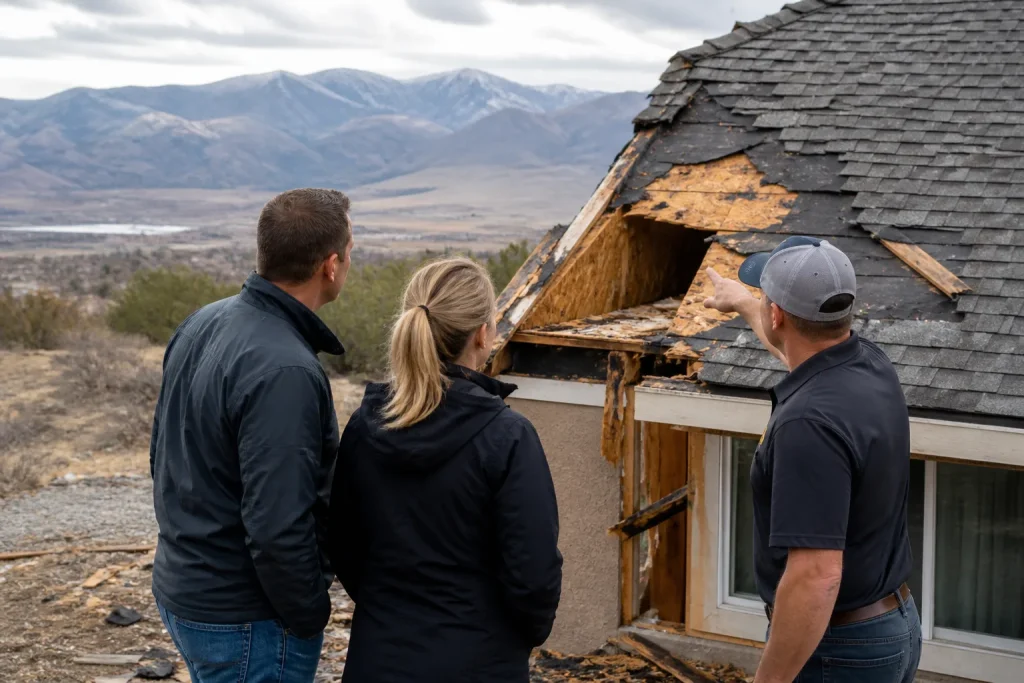
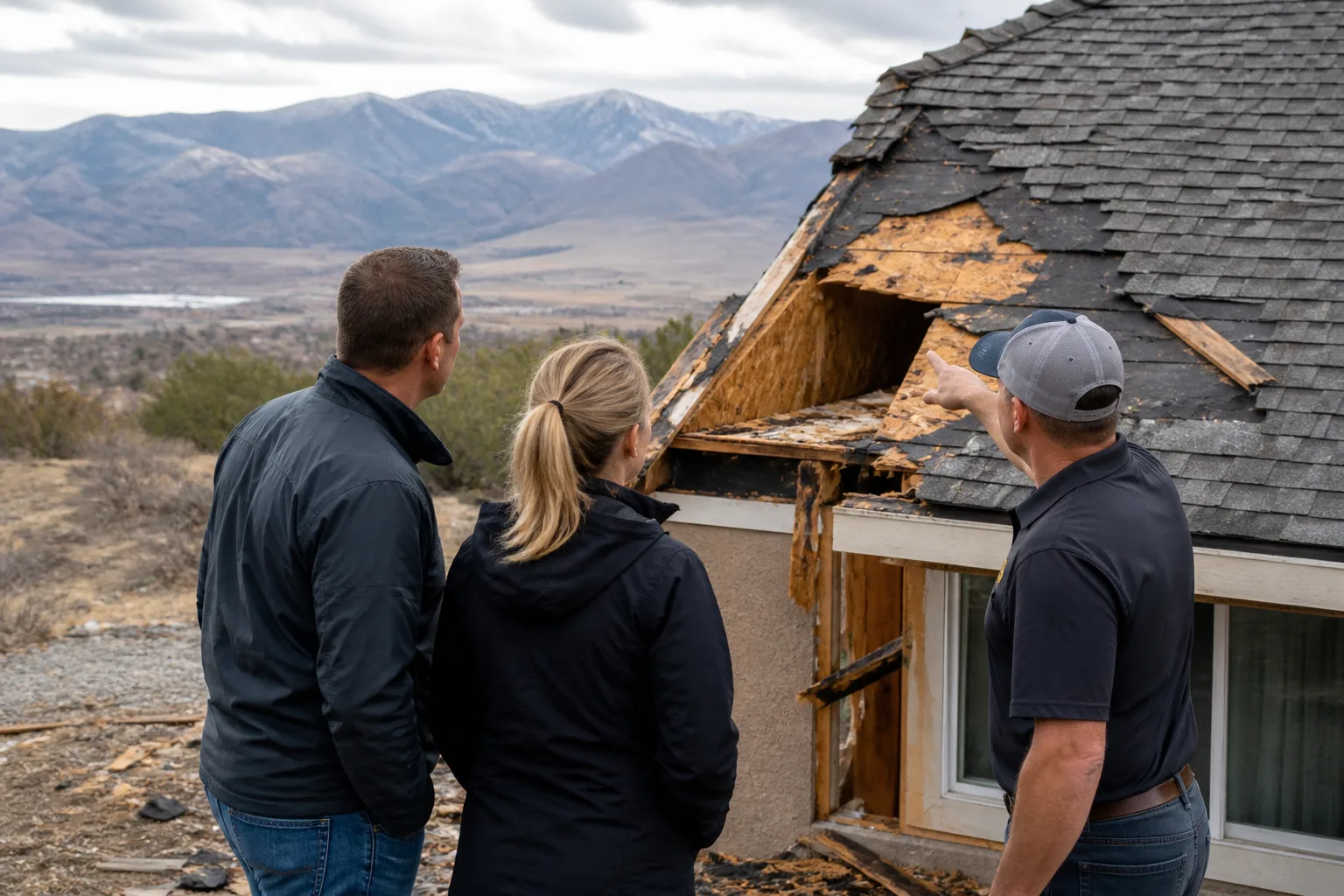
Emergency General Contractor Near Me: What Whitney Homeowners Should Do First
If you call a contractor before you photograph the damage and notify your insurer, you may have already weakened your claim. That’s the part nobody tells you at 2 a.m. when water is running down the inside of a wall. The first 30 minutes of a remodeling emergency decide who pays, and most Whitney homeowners spend those minutes dialing contractors instead of doing the three documentation steps that protect the claim. This guide puts the sequence in the right order: document, notify your insurer, then call a contractor.
If you’d rather not sort through any of that alone, call (833) 620-4908 and a live person will pick up, day or night. But read this first. It takes five minutes and it may be the most valuable five minutes of the whole ordeal.
What should a Whitney homeowner do in the first 30 minutes of a remodeling emergency?
Document the damage, stop the source if it’s safe to do so, and contact your insurer, in that order, before you call any contractor. We know that feels backwards when a supply line just let go under a kitchen sink. But contractors who start emergency work without insurer coordination regularly trigger claim denials, and the homeowner eats the cost. Insurance adjusters want evidence of the loss as it happened, not after a crew has already hauled the wet drywall to the curb.
Here’s the sequence that protects you:
- Stop the source, not the damage. Shut the water main, kill the breaker to the affected circuit, or shut the gas valve if that’s the issue. Don’t start pulling cabinets or tearing out drywall yet. You’ll want that damage visible for the adjuster.
- Photograph and video everything. Wide shots of the room, close-ups of the failure point (the burst fitting, the scorched outlet, the cracked supply line), and a shot of a tape measure against the water line on the wall. Timestamped phone photos are fine.
- Call your insurer’s claims line. Not your agent’s office, the 24-hour claims number on your policy card. Get a claim number and the name of the adjuster assigned. Ask one specific question: “What does my policy require before emergency mitigation begins?”
- Then call a contractor. With a claim number in hand, you can tell the contractor exactly who’s coordinating and what the insurer needs documented.
We pulled a water-damaged vanity out of a home near the Painted Desert golf course last year where the homeowner had done all four steps before we arrived. The claim moved through without a single pushback because the photos were dated and the mitigation was pre-authorized. That’s what squared away looks like.
What’s the difference between “emergency mitigation” and “repair” in an insurance policy?
Emergency mitigation is the work that stops further damage and protects the structure right now; repair is the permanent restoration that comes after. That one line in your policy determines who pays, and for how much. Most homeowners’ policies cover mitigation under a duty-to-protect clause, which means you’re actually required to take reasonable steps to prevent additional damage. Fail to do that and the insurer can reduce the payout on the secondary damage.
Where it gets tricky is the boundary. Here’s how the terms break down in practice:
- Emergency mitigation: water extraction, drying equipment, boarding up a broken window, tarping a compromised roof, shutting off and capping a failed line. Temporary and protective.
- Repair: replacing the drywall, reinstalling the vanity, re-tiling the shower pan, rebuilding the deck that rotted. Permanent and restorative.
- Betterment: anything that upgrades what was there before. A standard vanity replaced with a custom KraftMaid cabinet is a betterment unless the policy says otherwise. Adjusters rarely pay for betterment.
The line matters because a legitimate emergency contractor will bill mitigation and repair as separate scopes. If a contractor hands you one lump number covering “emergency restoration,” ask for the breakdown. Insurance adjusters in Whitney will ask for it too.
What are the red flags of emergency contractor scams after a storm in the Whitney and Las Vegas metro area?

Storm events in the Las Vegas Valley, from monsoon microbursts to the winter wind events that peel shingles off roofs in the foothills, bring out contractors who follow the weather. Most are gone by the time the guarantee period would matter. We’ve seen the pattern play out across the Whitney and Paradise areas for years, and the red flags are consistent.
- They knock on your door within hours of the storm. Legitimate contractors get calls; they don’t cold-knock damaged neighborhoods. Especially not with a clipboard and a “free inspection.”
- They want a deposit before any paperwork. Cash up front, no written scope, no contract. A demand for payment before a written price is the tell.
- They can’t produce a written scope before starting work. The scope should list materials, labor, and rate basis. No document, no work.
- They won’t coordinate with your insurer. A real emergency contractor documents for the adjuster as a matter of course. A scammer wants the insurer out of the loop.
- They have no verifiable address or phone that reaches a live person. A cell number that goes to voicemail is not a point of contact. It’s a vanishing act waiting to happen.
One more: “We’re working the neighborhood this week, so we can give you a deal.” That sentence is a discount built on the fact that they’ll never come back to honor the guarantee. There’s no deal, just an exit strategy.
What should you demand in writing before an emergency contractor starts work?
You should demand three things in writing before any tool comes out: a detailed scope of work, a stated rate basis, and an insurance coordination clause. All three, no exceptions, even at 3 a.m. Especially at 3 a.m. This is where a contractor who runs by a written standard separates from one who improvises.
Here’s what each one should contain:
- Scope of work: What’s being removed, what’s being installed, what’s being left alone. Materials named by brand and specification, not “standard vanity” or “builder-grade fixture.” A serious contractor documents this the way they’d document a kitchen remodel.
- Rate basis: Is this time-and-materials at a stated hourly rate, or a fixed price for a defined scope? Emergency work often uses T&M because the damage extent isn’t known until walls open. If it’s T&M, get the hourly rate and material markup in writing. If it’s fixed, get the fixed number. Both are legitimate. “We’ll work it out after” is not.
- Insurance coordination clause: A statement that the contractor will document the loss for the adjuster, provide itemized invoices in the format the insurer requires, and communicate with the claims adjuster directly. This is the clause that prevents the “we did more than the policy covers” surprise bill.
When you’re ready to talk scope and pricing on the rebuild side, our General Contractor in Whitney page lays out how we handle everything from emergency repairs to full-scale projects, with a written price before work begins and a documented materials roster behind every specification.
How does Bradford’s written guarantee apply to emergency response work?
Every completed emergency repair we do carries the 365-Day Done Right Promise: if the work fails within a full year of completion, we come back and correct it at no charge. That applies whether the trigger was a monsoon leak that took a soffit with it or a failed supply line that soaked a bathroom floor. A written guarantee isn’t a marketing line. It’s a specific term, and it should be in your hand at job close.
That said, a legitimate emergency contract has scope exclusions, and ours does too. Here’s what’s not covered by the guarantee:
- Pre-existing conditions that weren’t part of the emergency repair scope. If we dry and refinish a wall and the leak that caused it was from a plumbing line we didn’t touch, the guarantee covers our work, not the plumbing failure.
- Damage from a new event after the repair is complete. A second storm isn’t a failure of the first repair.
- Work performed by others on the same system adjacent to ours.
- Owner-supplied materials we didn’t specify or document.
Those exclusions are normal and you should expect them in any emergency contract. What shouldn’t be normal is vagueness about who’s coordinating with your insurer, or a “guarantee” that turns out to be verbal. When we respond to an emergency in Whitney, the scope, the rate basis, the insurance coordination clause, and the 365-Day Done Right Promise are all in writing before we start. That’s The Garrison Standard, and it doesn’t change because it’s 2 a.m.
When should a Whitney homeowner call a pro instead of handling the emergency alone?
Call a pro the moment the emergency involves something you shouldn’t touch: a gas line, an electrical panel, a structural wall, or a roof you’d have to climb to reach. Those aren’t DIY territory. A gas odor means you clear the house and call the utility; it doesn’t mean you tighten a fitting. A scorched outlet means you kill the breaker and stop there. Structural damage means you get out from under it.
We’ve seen homeowners in Whitney try to dry a flooded subfloor with box fans and a shop vac, only to have mold establish itself in the wall cavity within a week. The mitigation that looks like overkill on night one is the cheap option by day ten. That’s why we work with background-checked, uniformed technicians on every emergency job, so you know exactly who’s walking through your door before the crew arrives. The documentation standards, the conduct standards, all of it is set at the Garrison Partners level, not left to individual job sites.
If your emergency is going to turn into a repair or rebuild, and most do, you’ll want the scope worked out by someone who does this daily. Our Kitchen Remodeling in Whitney and Bathroom Remodeling in Whitney teams pick up right where the mitigation leaves off, with specifications on brands like Schluter and American Standard so nothing gets left to guesswork on the rebuild.
Related services in Whitney: Bradford Remodeling Co Whitney home, General Contractor in Whitney, Kitchen Remodeling in Whitney, and Bathroom Remodeling in Whitney.
Key Takeaways
- Document, notify your insurer, then call a contractor. Reversing that order can cost you the claim.
- Know the mitigation-versus-repair line in your policy. Your duty-to-protect clause requires stopping further damage; the insurer pays for that, but only if it’s documented.
- Demand three things in writing: a scope of work with named brands, a stated rate basis (fixed or time-and-materials), and an insurance coordination clause.
- Red flags after a Whitney storm: door-knocking contractors, deposits before paperwork, no written scope, no live-person contact, and pricing dangled as a “neighborhood deal.”
- Ask what’s covered and what’s excluded from any written guarantee before work starts. The 365-Day Done Right Promise has specific terms and specific exclusions; you should be able to read both.
The Bottom Line
The first 30 minutes of a remodeling emergency are a documentation exercise, not a shopping exercise. Photograph the damage, get a claim number from your insurer, then call a contractor who puts the scope, the rate, and the guarantee in writing before work begins. That sequence is what separates a claim that pays out from one that gets denied. In Whitney, we’ve watched that play out enough times to know it’s the difference between a squared-away repair and a fight with the adjuster.
If you’re in Whitney and need help, Bradford Remodeling Co Whitney offers free estimates. Call (833) 620-4908 and a live person will pick up, day or night, with no voicemail and no callback queue. We’ll walk you through the documentation steps if you haven’t started them, and we’ll put every number in writing before a tool comes out.
Frequently Asked Questions
Call your insurer’s 24-hour claims line first. Get a claim number and the adjuster’s name before you contact any contractor. Contractors who start emergency work without insurer coordination can trigger claim denials because the documentation isn’t in place. Once you have a claim number, call a contractor and share it, so the scope and invoicing match what the adjuster expects.
Most standard policies cover emergency mitigation under a duty-to-protect clause, which requires you to take reasonable steps to prevent further damage. The key is that you document the loss before mitigation begins and keep the mitigation and repair scopes separate on the invoice. A contractor who understands the line will invoice that way automatically. Call (833) 620-4908 for the documentation checklist we use on every emergency job.
A written scope should list what’s being removed, what’s being installed (with brand and specification named), the rate basis (fixed price or time-and-materials with stated hourly rate and material markup), and an insurance coordination clause. If any of those three is missing, ask for it before work starts. Estimates are free; call (833) 620-4908 and we’ll walk through exactly what yours should contain.
Yes. Every completed emergency repair we do carries the 365-Day Done Right Promise, which means if the work fails within a full year of completion, we come back and correct it at no charge. The standard exclusions apply: pre-existing conditions not in the repair scope, new damage from a separate event, and work performed by others. The full terms are in writing at job close. Call (833) 620-4908 for a free estimate and we’ll go over the specifics before work starts.
Written by the team at Bradford Remodeling Co Whitney.
Need Construction Help?
Call Bradford Remodeling Co Whitney - licensed & insured, here with fast after-hours help in Whitney.
(833) 620-4908