Last updated November 18, 2026







Free written scope consultation - allowances, timeline, and change-order rules on paper before a single trade is scheduled
How Long Does Home Remodeling Take? Timelines and What to Expect
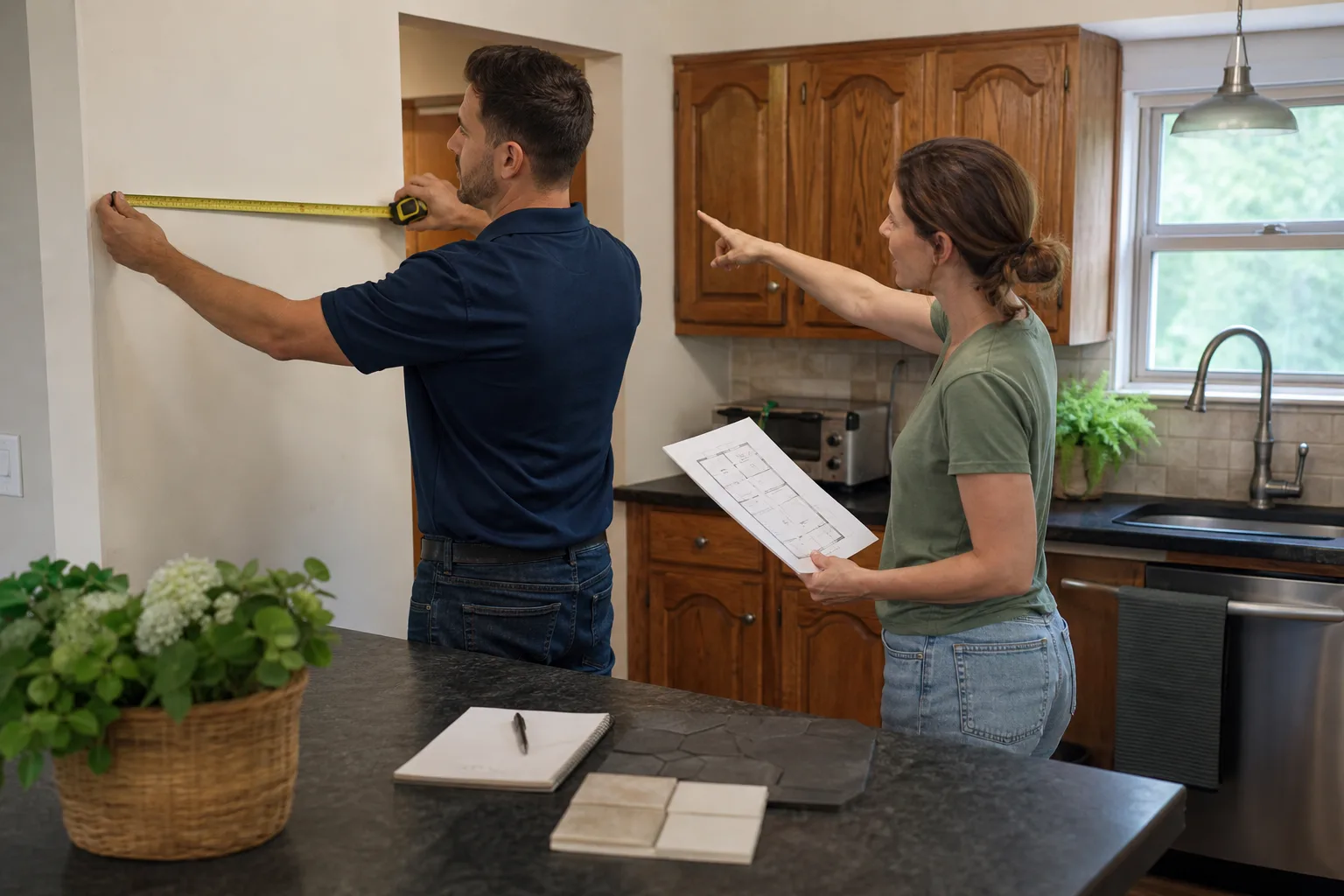
The national average kitchen remodel takes 6-8 weeks on paper. In practice, a majority of them run past 10 weeks, and the reason is almost never lazy carpenters. It’s that nobody wrote a sequencing schedule before the first wall came down. A crew that shows up on time to a job with no locked inspection slot, no confirmed cabinet ship date, and no defined completion milestone is still going to miss the date. In this guide we’ll show you how to read a remodel timeline the way a crew chief reads it: permit lag, material lead times, trade sequencing, and the exact contract language that separates a real commitment from a hopeful calendar. We build in Whitney, and the timelines below reflect what we actually see here.
Quick Answer
A typical home remodel takes 3-6 weeks for a bathroom, 6-10 weeks for a kitchen, and 4-9 months for a whole-home project, measured from permit approval rather than from the day demo starts. The biggest overruns come from permit review lag, material backorders, and missed inspection calls, not from slow labor. If a schedule isn’t written into your contract with dated milestones and a defined completion standard, treat the timeline as an estimate, not a promise.
Styles & brands we work with
- Kitchen remodeling
- Bathroom remodeling
- Home additions & ADU
- Roofing
- Windows & doors
- Driveway & pavers
- Fence
Table of Contents
- How long does each type of remodel take?
- Trade sequencing: why the order of work matters more than the speed of it
- Whitney and Clark County permit timelines
- Material lead times: what’s on backorder and what ships this week
- How to read a project schedule in a contract
- Substantial completion: what it legally means vs. what you probably think
- What a missed inspection actually costs you in days
- Common mistakes to avoid
- Frequently asked questions
How long does each type of remodel take?
Here’s the range we give Whitney homeowners before a contract is signed. These are calendar weeks from permit approval to final walkthrough, not working days, and they assume materials are ordered at contract signing rather than after demo.
- Bathroom remodel (full gut): 3-6 weeks. Tile work and rough-in drive the lower and upper end.
- Kitchen remodel (no layout change): 6-9 weeks. Cabinet and countertop lead times are the wildcard.
- Kitchen remodel (layout change, wall moved): 9-14 weeks. Adds plumbing relocation and a second inspection cycle.
- Whole-home remodel (occupied or vacant): 4-9 months depending on scope.
- Room addition: 3-5 months including foundation cure time.
Notice what’s missing from those ranges: demo. Tearing out a kitchen in Whitney takes two or three days on most jobs. The timeline lives in the middle, in the sequencing, and that’s where our Kitchen Remodeling in Whitney work either stays on schedule or doesn’t. A kitchen with a written schedule and pre-ordered KraftMaid cabinets runs closer to 7 weeks than 12. The same kitchen with cabinets ordered the week after demo runs 12 whether anybody works fast or not.
One Whitney-specific factor that affects timing: summer heat. From June through September, exterior work like stucco repair and roof work in Whitney gets compressed into early morning hours, which can stretch an exterior remodel by a week or two compared with spring. Interior work isn’t affected by heat, but if your project has any exterior component, plan around it rather than fighting it.
Trade sequencing: why the order of work matters more than the speed of it
Every remodel follows roughly the same trade order. Skipping ahead to save time is how jobs fall behind by three weeks. Here’s the sequence a disciplined crew runs:
- Demo and structural. Tear-out, framing changes, and any wall removal. Inspection follows.
- Rough-in. Electrical, plumbing, and HVAC lines run inside the walls before anything closes up. This is the step that cannot move.
- Rough inspection. The building inspector verifies rough-in before drywall goes up.
- Insulation and drywall. Hang, tape, mud, texture, prime.
- Finish trades. Tile, cabinets, countertops, trim, paint, and fixtures in that order.
- Final inspection and punch list. Sign-off, correction list, walkthrough.
The reason rough-in has to precede drywall isn’t tradition. It’s that once drywall is up, adding a circuit or a drain line means cutting into finished walls, which is a do-over for two trades in sequence. Homes with plaster walls in older Whitney neighborhoods make this worse, since patching during drywall is one thing and patching after paint is another. Any crew that tells you the electrical can wait until after drywall is a crew that will be back in your house cutting holes two weeks from now.
Sequencing also runs in parallel where it can. Cabinet fabrication, countertop templating, and window ordering all happen during rough-in, which is why we insist on scheduling those during the first week. Nothing about a well-run schedule is slow. It’s just ordered.
Whitney and Clark County permit timelines
Clark County reviews residential permits through the county building department, and review timelines have varied between roughly two and six weeks for standard residential remodels in 2024 and 2025. Cosmetic work like paint, flooring, and cabinet replacement without moving plumbing or electrical typically doesn’t require a permit. Anything structural, anything that moves a gas or water line, and anything that adds square footage does.
Here’s what we see on the ground:
- Cosmetic remodel: no permit needed, start when materials arrive.
- Bathroom with moved plumbing: 2-4 weeks review, more if the fixture layout is unusual.
- Kitchen with moved plumbing or electrical panel change: 3-5 weeks review.
- Room addition or wall removal: 4-8 weeks including engineering review and any plan check corrections.
The single biggest permit trap in Whitney is plan-check corrections. The first submission comes back with comments, the contractor resubmits, the reviewer gets back to it in another two weeks. When a homeowner tells us their last contractor took two months “before starting,” the contractor was usually waiting on a resubmission that nobody flagged. We pull permits and route them through Clark County before demo day for exactly this reason, so the clock runs while you’re picking tile. If your project is a full gut rather than a single room, the permitting picture is different again, and our home remodeling and general contracting work in Whitney starts with the permit sequence mapped against your calendar.
Material lead times: what’s on backorder and what ships this week
Material lead time is the single most common cause of a project stalling after demo. Here’s the current reality by category, based on what we’re seeing on our own jobs:
- Semi-custom cabinetry (KraftMaid, Wellborn): 6-10 weeks from order. This is the longest lead time in a kitchen and the one that determines the finish date. Order at contract signing or the whole schedule floats.
- Stock cabinets: 1-2 weeks. Faster, but limits layout. Most Whitney kitchens with a tight footprint use semi-custom anyway.
- Countertops (quartz, stone): 2-4 weeks including fabrication and templating, which can’t happen until cabinets are installed.
- Tile: 1-3 weeks for stock, 4-8 for special order. Tile needs to be on site before the tile setter arrives, not the week he arrives.
- Fixtures (Kohler, Moen, Delta, Toto, American Standard): 3 days to 3 weeks. Some finishes sit in warehouses, others don’t. Blanco sinks vary by model.
- Windows and exterior doors (Therma-Tru, James Hardie siding): 4-8 weeks. Every exterior project lives or dies on the window order date.
The pattern you’ll notice: the longest lead times belong to the most customized items. A homeowner who wants the fastest kitchen should pick from what’s available, not from a brochure. A homeowner who wants the exact kitchen they picked should plan on 9 weeks and not be surprised. Both are legitimate choices, but only one of them gets a schedule that holds.
How to read a project schedule in a contract
A Gantt chart is not a promise. A schedule in a contract is a commitment only if it has three things in writing: dated milestones, a defined completion event, and a consequence if the dates slip. Without all three, the chart is decoration.
Here’s how to tell the difference:
- Milestone vs. commitment. A milestone is a flagged date (“rough inspection week of March 3”). A commitment is a milestone tied to a remedy clause (“if rough inspection isn’t passed by March 10, contractor credits $X per business day”). Ask which you’re getting.
- Whose risk is the delay? A contract should spell out what happens if the delay is caused by weather, by a permit reviewer, or by an owner selection made late. Legitimately, some delays aren’t the contractor’s fault. The point isn’t to assign blame, it’s to define it before demo day, so nobody argues about it later.
- What shipment dates are tied to the schedule? The cabinet order date should be in the contract, and so should the fixture arrival date. No dates, no schedule.
- Completion defined in days or events? A real schedule says “substantial completion = all inspections passed and punch list delivered within 5 business days.” A vague schedule says “completion by end of spring.”
Ask for the schedule in writing at the same time you ask for the price. A contractor who won’t put dates in writing is telling you the dates are aspirational. Our written price commitment extends to the schedule: we put dates for permit submission, rough inspection, cabinet delivery, and substantial completion in the contract before any work begins, and we hold ourselves to them.
Substantial completion: what it legally means vs. what you probably think
“Substantial completion” is the phrase in your contract that most homeowners misread. Legally, it generally means the work is complete enough that the owner can use the space for its intended purpose, with only minor punch-list items remaining. It does not mean every last item on your list is done, and it does mean your final payment is typically due.
The gap between the two definitions causes most remodel disputes. Consider:
- Homeowner expectation: every trim piece, every outlet cover, every touch of paint is finished before final payment.
- Contract meaning: the space is usable, inspections are signed off, and remaining items are minor.
In a well-run project this distinction rarely matters, because punch-list items get finished within a few days of substantial completion. In a poorly run project, it becomes the friction point. Ask any contractor you’re considering to define substantial completion explicitly in the contract, name the punch-list completion window (we use 5 business days), and state exactly when final payment is due relative to both. A contractor who won’t define the term is going to argue about it later, and the argument always goes in the contractor’s favor when the language is unclear.
The 365-Day Done Right Promise runs from substantial completion, not from the day you hand over the final check. Any punch-list corrections, and any subsequent failure in the finished work within a year, we come back and correct at no charge. That’s a written guarantee, part of our ledger regardless of which phase of the project you’re in when you talk to us. You can read more about the guarantees behind our General Contractor in Whitney work in detail.
What a missed inspection actually costs you in days
Whitney homeowners often don’t realize how much of their timeline is inspection dependent. When a rough inspection is scheduled and the inspector finds something that needs correction, the correction is one thing and the re-inspection is another. The re-inspection doesn’t get scheduled for days, and the inspection pit in the calendar doesn’t move easily.
Here’s the compounding cost:
- Failed inspection: correction takes 1-2 days of work.
- Re-inspection schedule: 3-10 business days depending on county inspector availability.
- Downstream trade delay: 1-3 days because they were booked and had to be rescheduled.
Add those up and one missed inspection is 5-10 business days minimum, sometimes more. In a bathroom remodel, that’s the difference between a 4-week job and a 6-week job. The fix isn’t a better inspector relationship, it’s a better schedule: inspections should be scheduled at the moment the previous phase starts, not after it finishes. Our crews schedule the rough inspection the day the rough-in work goes in, not the day it’s done. Whitney homeowners who’ve been burned by a stop-start project tell us the same thing afterward: it was the waiting that hurt, not the work.
Common Mistakes to Avoid
- Ordering cabinets after demo instead of at signing. This single decision adds 4-6 weeks to a kitchen. Order the day you sign, before anyone lifts a hammer.
- Assuming “no permit needed” without checking. Cosmetic work usually doesn’t need one, but any plumbing, electrical, or structural change in Whitney does. Ask before demo, and check with Clark County yourself if the contractor is vague.
- Reading the Gantt chart and skipping the guarantee clause. The chart shows what’s planned. The guarantee is what happens when it doesn’t. Both belong in the contract, and the second one is more important.
- Buying fixtures on the fly. A homeowner deciding on the tile in week 4 instead of week 1 pushes the tile setter out a week or more, and the cabinet install slides with it.
- Paying final in full before punch-list completion. Substantial completion and punch-list completion are different events. Hold the final payment until the punch list is signed off.
- Letting the schedule live in a verbal agreement. If it isn’t in the contract, it isn’t a commitment. Verbal timelines evaporate precisely when you need them.
- Forgetting the 30-day cure on tile and paint. Whitney’s dry climate helps with cure time for thin-set and paint, but the first month following substantial completion is still when finished surfaces find their final form. Allow for a correction visit within 30 days and plan around it.
See the difference
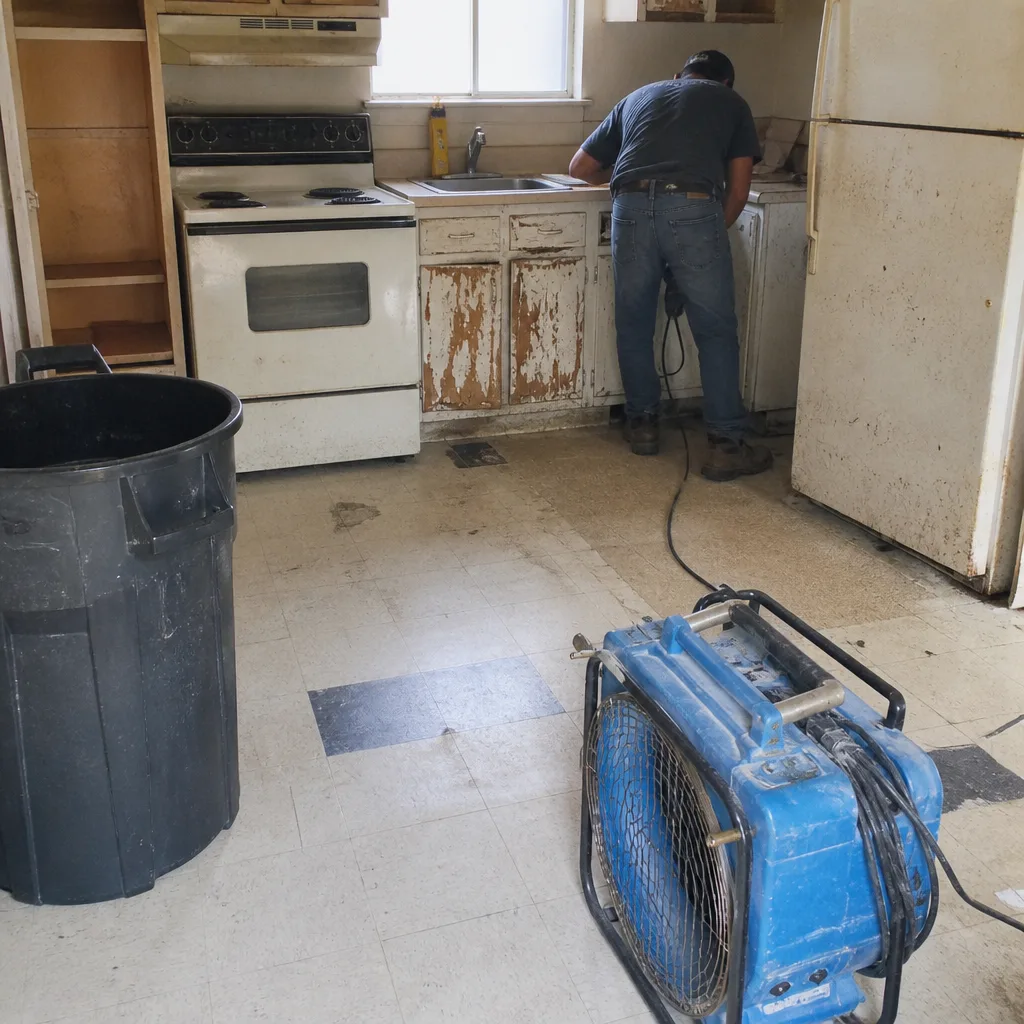 Before
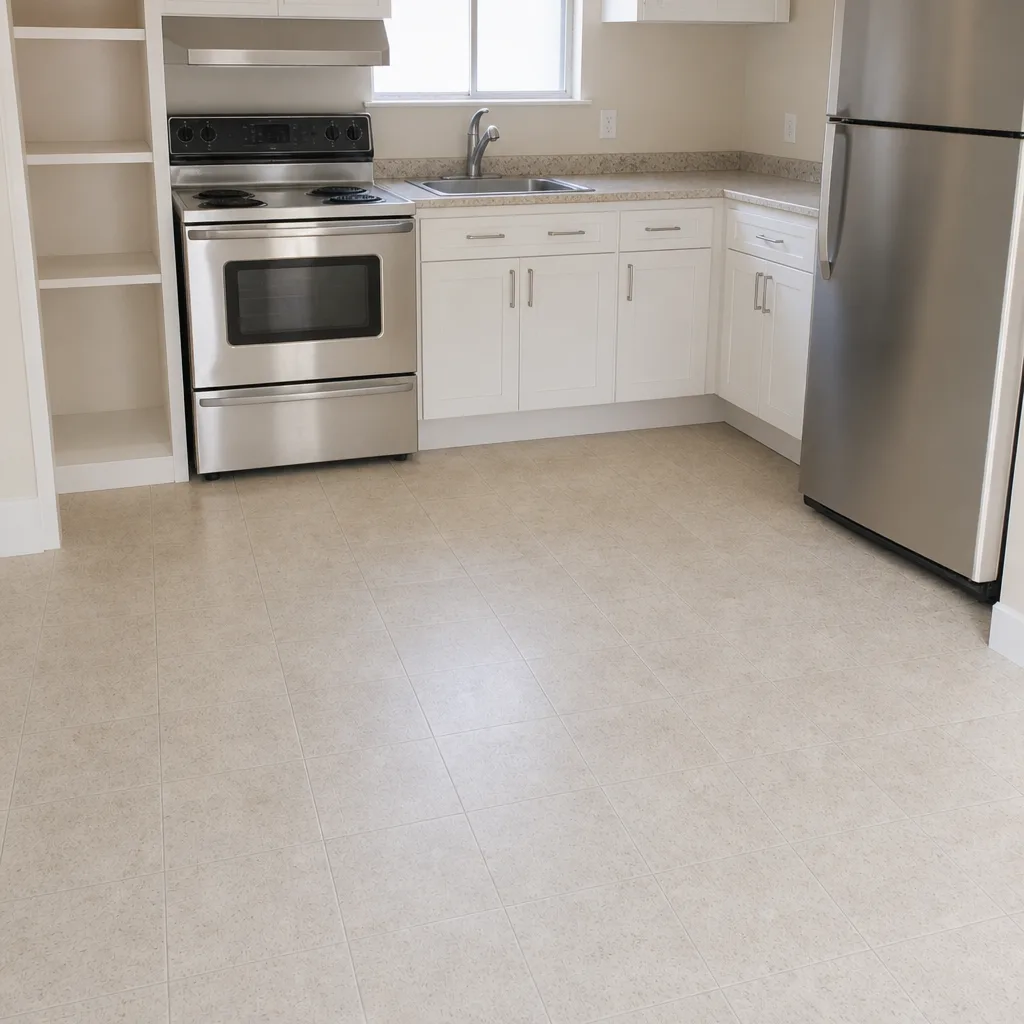 After
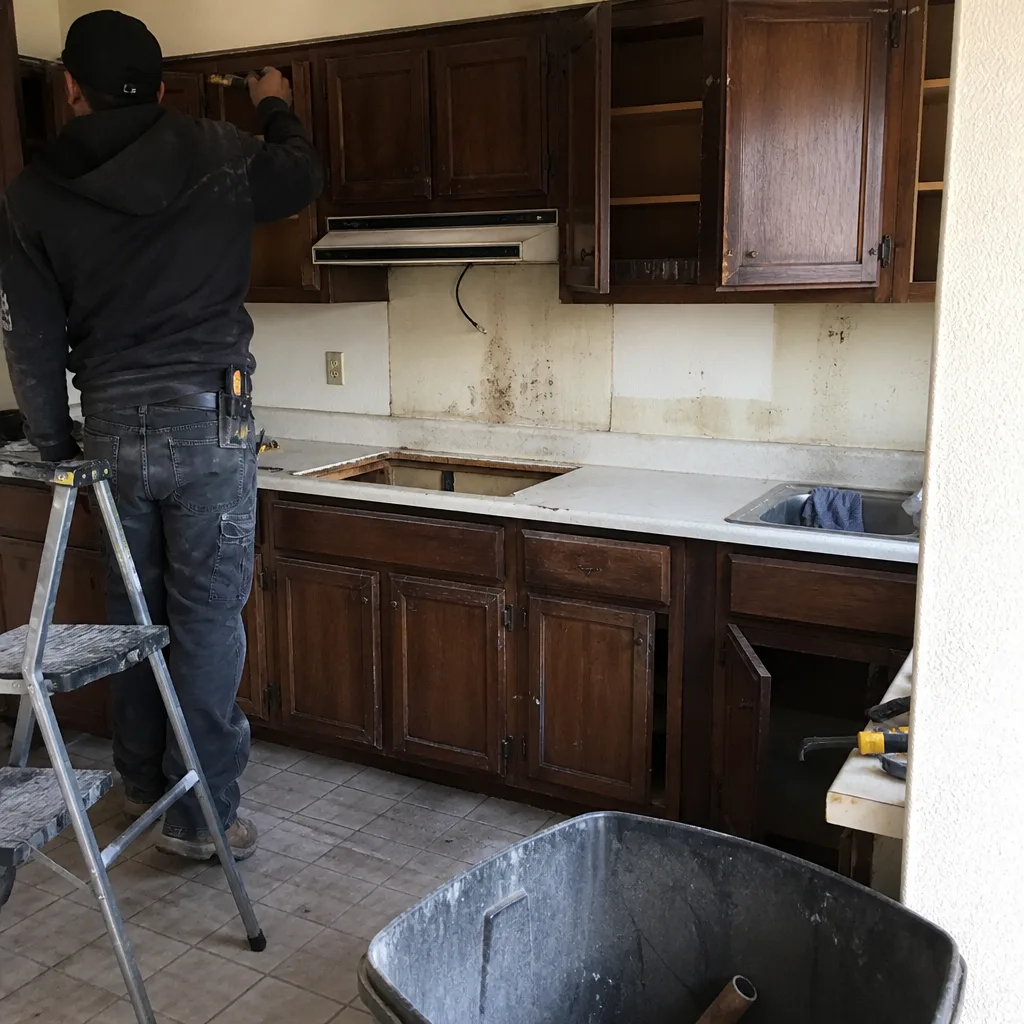 Before
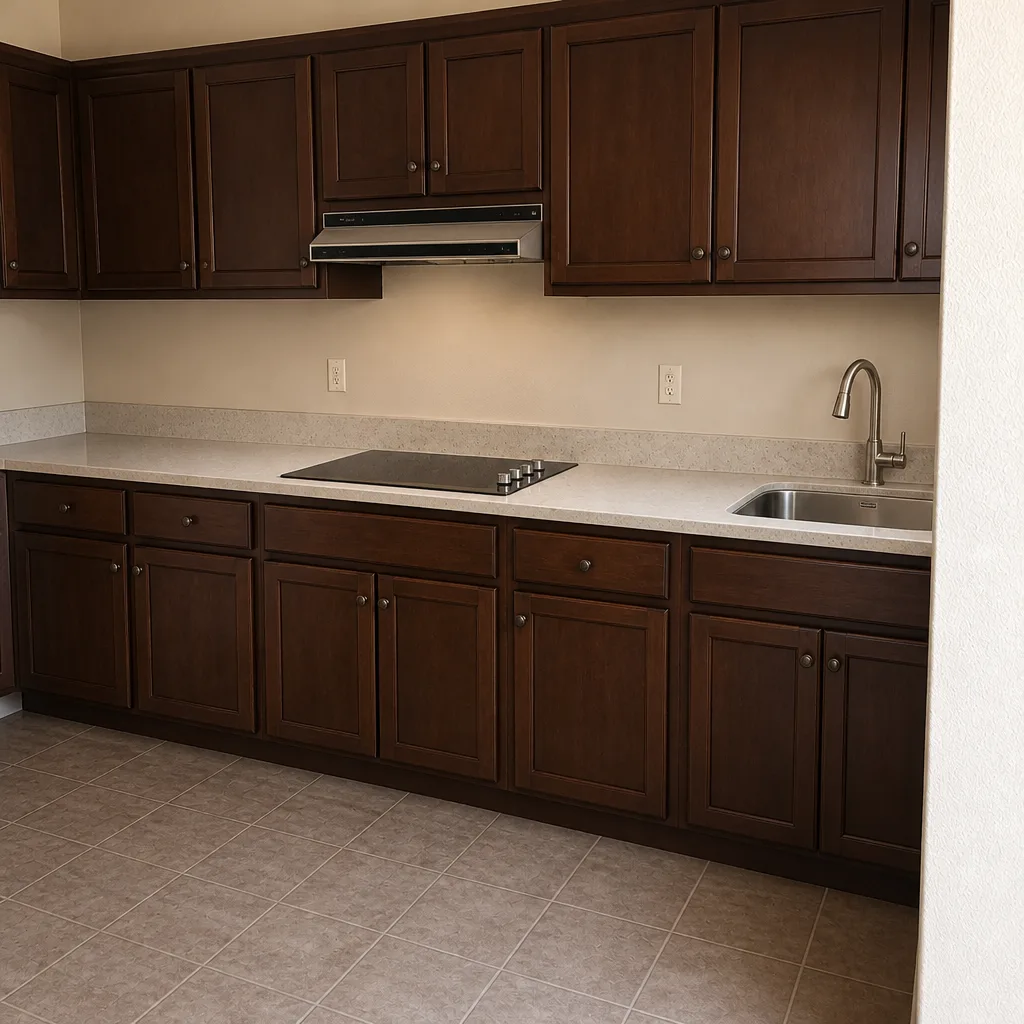 After
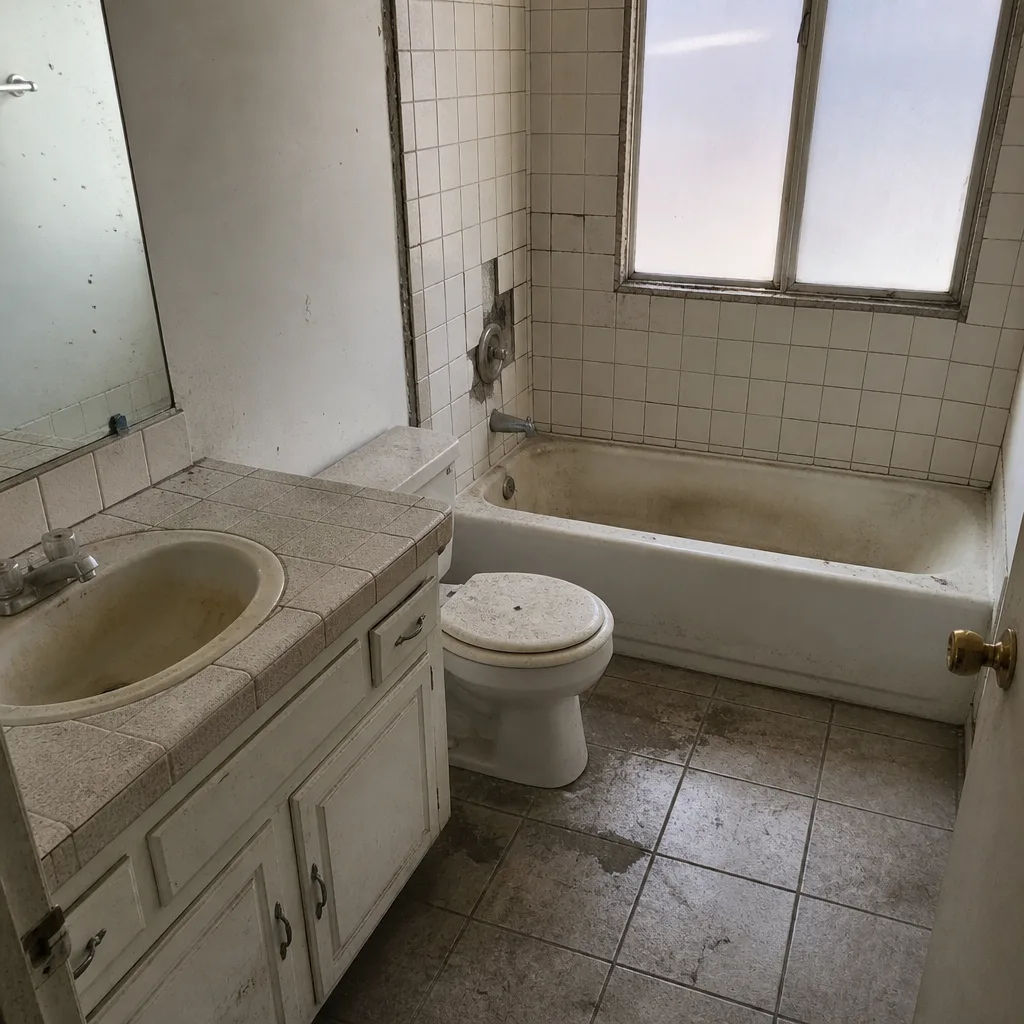 Before
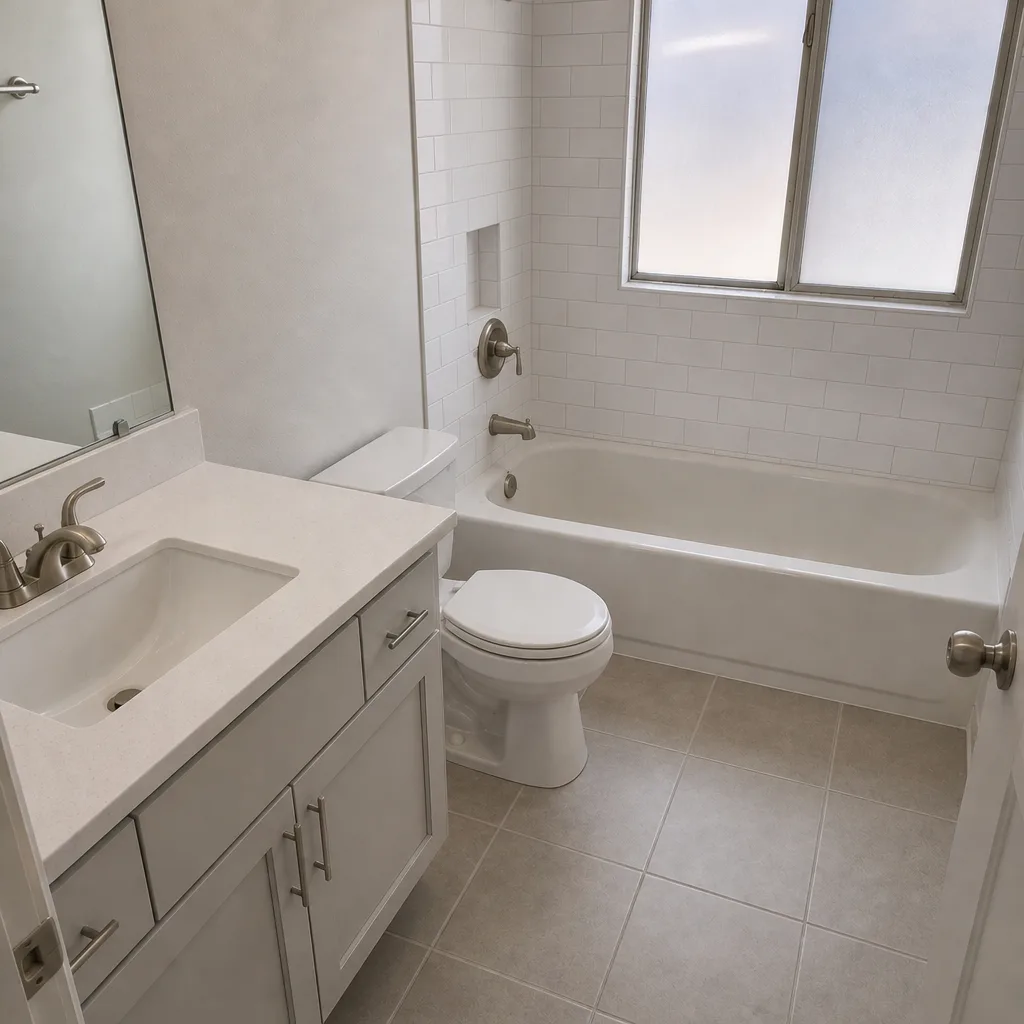 After
When to Call a Professional
If your remodel involves moving plumbing or gas lines, changing the electrical panel, removing a wall, or adding square footage, that work has to be permitted, inspected, and done by someone with the training to do it safely. The same applies if you’re replacing a water heater, rerouting a drain, or dealing with anything structural. These aren’t projects where the schedule is the only risk. If your existing bathroom has been leaking into the subfloor, or the kitchen wiring was last touched decades ago, call a professional before demo because what’s behind the wall changes the schedule and sometimes the scope. Our bathroom remodeling work in Whitney starts with a scope conversation and a written price, not a sales pitch. Bradford Remodeling Co Whitney offers free estimates in Whitney. Call (833) 620-4908 to schedule yours. Every estimate comes with a written price, a written schedule, and a written guarantee before you sign.
Frequently Asked Questions

A kitchen remodel in Whitney typically takes 6-9 weeks from permit approval to substantial completion, with layout changes adding 3-5 weeks. The wildcard is cabinet lead time, which runs 6-10 weeks for semi-custom KraftMaid or Wellborn cabinetry, so ordering at contract signing is the single biggest schedule saver. Call (833) 620-4908 for a written schedule tied to your exact scope.
A full bathroom gut remodel usually takes 3-6 weeks, or 2-4 weeks if the plumbing layout doesn’t change. Tile work and inspection scheduling drive the range. Call (833) 620-4908 for a free estimate with an actual dated schedule.
You need a permit for anything structural, for moving plumbing or gas lines, and for adding square footage in Whitney. Cosmetic work like paint, flooring, and cabinet replacement without moving utilities typically doesn’t need one. Clark County reviews standard residential permits in roughly 2-6 weeks based on 2024-2025 timelines.
Overruns aren’t random. They trace to one of three causes: permit review lag, material backorders (usually cabinetry), and missed inspections. Each of those is predictable, which means each can be built into a schedule before demo day. A written schedule with dated milestones and a remedy clause is how you avoid them.
Substantial completion means the work is complete enough for the owner to use the space, with only minor punch-list items remaining. It is usually the trigger for final payment, which surprises homeowners who expect every trim piece to be finished first. Define the punch-list completion window in the contract to avoid the mismatch.
Yes, on most projects, though you’ll lose the kitchen for 2-4 weeks during the heaviest phase. In Whitney, homeowners often set up a temporary kitchen in the garage or laundry room. The schedule is a bit longer when you stay, but not much. Call (833) 620-4908 to talk through the tradeoffs on your specific layout.
The Bottom Line
The timeline of a remodel is decided before demo day. Permits pulled early, materials ordered at signing, inspections scheduled in advance, and completion defined in writing all compress the calendar and prevent the delays that stretch a 7-week kitchen into a 12-week one. A contractor who can show you a dated schedule, define substantial completion, and back the finished work with a written guarantee is a contractor whose timeline you can hold them to. Read the schedule in the contract the same way you’d read the price. Both should be specific, dated, and enforceable.
Written by the team at Bradford Remodeling Co Whitney.
Call (833) 620-4908 for a free estimate. A live person answers around the clock, every day of the week, and every project comes with a written price before work begins and the 365-Day Done Right Promise on the finished job.