Last updated November 18, 2026






Free written scope consultation - allowances, timeline, and change-order rules on paper before a single trade is scheduled
How to Hire a Construction Contractor in Whitney: A Step-by-Step Guide
Three bids only help you if the bids are written to the same scope. In Whitney, most homeowners discover after the fact that the cheapest bid excluded the line items that made the job expensive. The low number wasn’t a better deal; it was a shorter list. This guide treats the bid document itself as your primary vetting tool, because paperwork reveals more about a contractor than references do. You’ll learn how to issue a scope before anyone quotes, how to read Nevada licensing records for Clark County work authorizations, and how a lien waiver protects you at every payment. If you’d rather skip the guesswork, our team at Bradford Remodeling Co Whitney is glad to walk you through what a written scope and written price actually look like.
Quick Answer
To hire a construction contractor in Whitney, write a detailed scope of work first, then send that same document to every bidder so you’re comparing identical jobs. Verify the contractor’s Nevada license through the State Contractors Board and confirm it covers your project type, ask for a written price with line items and no open-ended allowances, and require a signed lien waiver at each payment milestone. The bid you can read line by line is worth more than the one with the friendliest references.
Styles & brands we work with
- Kitchen remodeling
- Bathroom remodeling
- Home additions & ADU
- Roofing
- Windows & doors
- Driveway & pavers
- Fence
Table of Contents
- Step 1: Write Your Scope of Work Before You Call Anyone
- Step 2: Verify the License in Nevada, Not Just a Logo
- Step 3: Read the Bid Document Like a Contract
- Step 4: Spot the Budget Landmines in Bid Language
- Step 5: Ask for Lien Waivers at Every Payment Milestone
- Step 6: Understand What a Written Guarantee Actually Covers
- What’s Different About Building in Whitney
- Common Mistakes to Avoid
- Frequently Asked Questions
Step 1: Write Your Scope of Work Before You Call Anyone
The single biggest reason Whitney homeowners get burned is that they ask for bids on a vague idea instead of a defined scope. “Remodel my kitchen” isn’t a scope. It’s a wish. A contractor bidding on it will fill the gaps with assumptions, and those assumptions are usually the expensive parts.
A scope of work is a plain document you write (or borrow from a template) that lists what the job includes and excludes. It doesn’t have to be technical. It has to be specific enough that two contractors reading it would describe the same job.
Your scope should answer, at minimum:
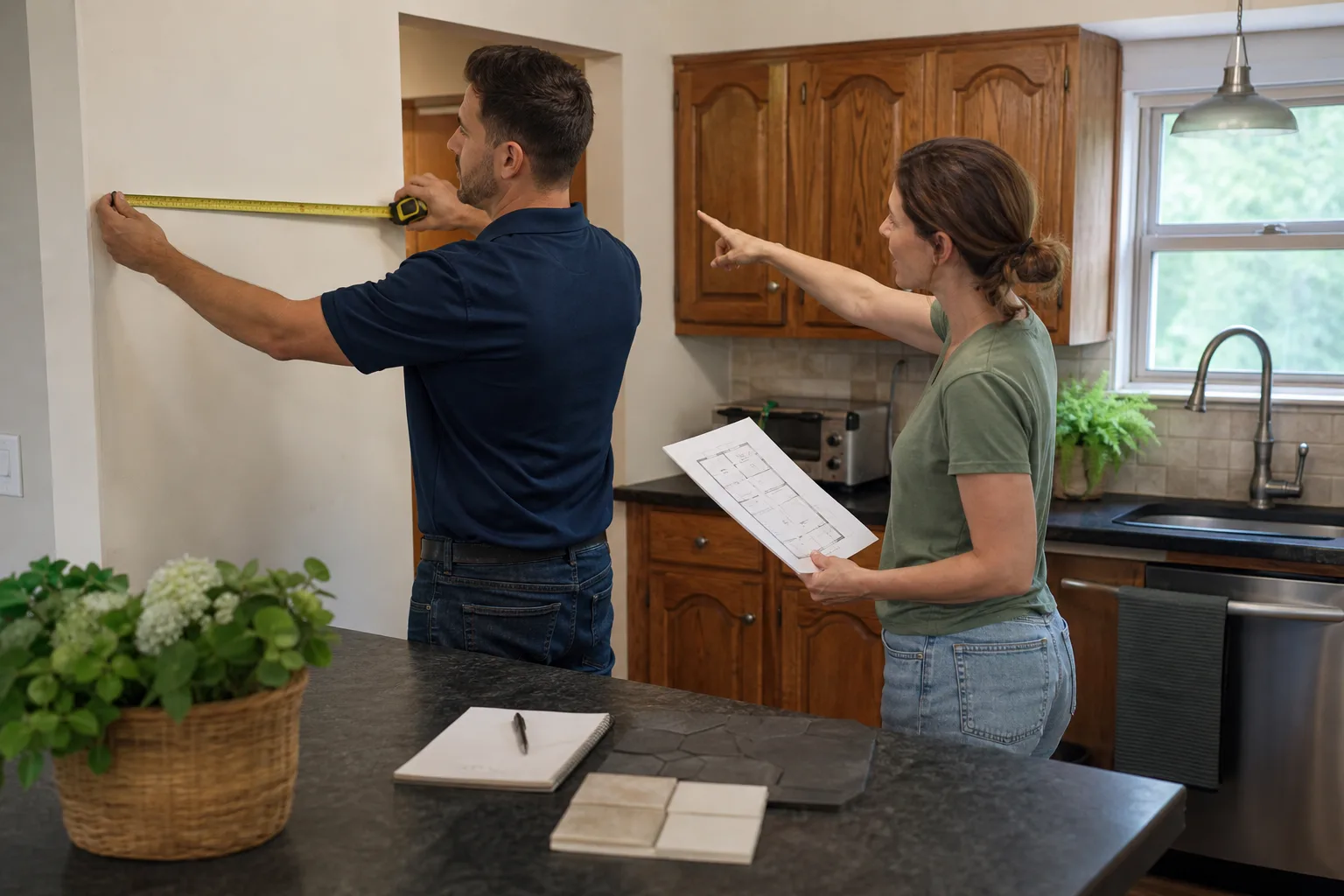
- Rooms and square footage involved, measured, not estimated.
- What stays and what goes: which cabinets, fixtures, flooring, or walls are being removed versus kept.
- Material expectations: not a brand name yet, but a tier. “Mid-grade semi-custom cabinetry” or “engineered quartz” tells bidders what ballpark you’re in.
- Exclusions you know about: if you’re keeping the existing refrigerator, say so. If the electrical panel is untouched, say that.
- Site access: where crews park, where materials stage, whether a bathroom is available on site.
In our experience, a homeowner who hands over a one-page scope gets bids that are 20 to 30 percent closer to each other in total price. That’s not because contractors suddenly got honest. It’s because there’s less room to guess. When you bid a Whitney kitchen remodel from a written scope, the line items align and the comparison means something.
Step 2: Verify the License in Nevada, Not Just a Logo
A magnetic sign on a truck isn’t a license. In Nevada, construction contractors are licensed through the Nevada State Contractors Board, and a license number is public record. Verify it before you sign anything, even if you’ve seen the contractor around Whitney for years.
- Get the license number in writing, not spoken. It should be on the bid document, the contract, and the contractor’s business card.
- Look up the number on the State Contractors Board’s public license search. Confirm the name matches the business you’re hiring and the license status is active.
- Check the license classification. Nevada licenses are classified by type of work. A residential remodeling license doesn’t cover everything. Make sure the classification matches your project.
- Confirm the license is in the name on the contract. A subcontractor’s license can’t cover the general contractor’s work. If your contract is with Company A, the license needs to be Company A’s.
- Ask about Clark County work authorization. Whitney sits in unincorporated Clark County, and work there falls under county jurisdiction. Permits aren’t automatically pulled by the state; they go through the county building department. Ask your contractor directly: “Will you pull the permits, and have you done work in unincorporated Clark County before?” If the answer wobbles, that’s the answer.
- Ask for a certificate of insurance naming you and the property address as additionally insured for general liability. If the contractor can’t produce it, don’t proceed.
This step takes fifteen minutes and saves years of regret. A contractor who resists giving you a license number or insurance certificate isn’t protecting themselves; they’re telling you something.
Step 3: Read the Bid Document Like a Contract
Here’s what most hiring advice gets wrong: it tells you to check references. But references are curated. The bid document can’t be curated as easily, because it has to hold up when the work starts. Read it like a contract, because that’s what it becomes.
A good bid has:
- A line-item breakdown, not a lump sum. You should see labor and materials split by phase: demolition, rough-in, drywall, finishes, trim.
- Named materials with quantities, where known. “KraftMaid cabinetry, 14 linear feet, style TBD” beats “cabinetry” every time.
- A clear start and completion schedule expressed in working days, plus what causes delays.
- A payment schedule tied to milestones, not calendar dates. “On completion of rough-in inspection” is a milestone. “In three equal installments” is not.
- A change-order process in writing. What happens if the budget moves? Who signs?
- A warranty statement with a number in it: how many days, what’s covered, what’s excluded.
- A clean-close clause: debris removal, site cleanup, and who owns leftover materials.
If the bid has a single total and a signature line, you’re not comparing bids. You’re guessing which guess is safer. Our team at Bradford’s general contracting work in Whitney publishes a written line-item price before work begins, and that commitment is not negotiable on any job.
Step 4: Spot the Budget Landmines in Bid Language
Three phrases in a bid document cause more Whitney kitchen overruns than any other: “allowance,” “as needed,” and “per owner selection.” Each one is a placeholder for a number the contractor hasn’t committed to. Each one shifts risk back to you.
Allowance means the bidder has included a stated dollar amount for a material you haven’t picked yet. A $2,500 tile allowance sounds fine until you pick tile at $4,100. The bid didn’t lie; the number was always a placeholder. Ask for allowance items to be either priced at your chosen material or removed from the bid scope entirely.
“As needed” is the contractor reserving the right to decide on scope after work starts. In a Whitney remodel, “electrical work as needed” can mean anything from a new outlet to a panel upgrade, with a price you learn about at the end. Ask for a defined scope: which circuits, which outlets, what the cap is.
“Per owner selection” removes the material from the bid price and pins the cost decision on you. It’s not inherently wrong, but it belongs in the exclusions section with a price range attached, not buried in the body of the bid.
The fix is straightforward. Before signing, send the bid back with one question: “Please replace every allowance, ‘as needed,’ and ‘per owner selection’ with either a firm number or an explicit exclusion with a range.” How a bidder responds to that request tells you more than any reference call. Our preference, and the way we work, is to lock specs up front so the material roster is documented: KraftMaid or Wellborn cabinetry, Cambria or Silestone surfaces, and specifications your contract can actually enforce.
Step 5: Ask for Lien Waivers at Every Payment Milestone
A lien waiver is a signed document from a contractor or subcontractor stating they’ve been paid for work or materials and waive their right to file a mechanic’s lien against your property. Nevada allows mechanics’ liens, and if a subcontractor doesn’t get paid, they can come after your home even though you paid the general contractor in full.
You need a waiver at every payment milestone, not just the final one. That means:
- Conditional waiver at each progress payment, which becomes unconditional when the payment clears.
- Final unconditional waiver at close, covering all labor and materials supplied.
- Subcontractor and supplier waivers collected by the general contractor and handed to you, not kept on file with them.
Asking for waivers feels awkward, like suggesting you don’t trust the person you hired. It isn’t. It’s a standard part of a professional construction contract, and the contractors worth hiring expect the request. Say it plainly: “I’ll be asking for a signed lien waiver with each payment, starting with the deposit.” A contractor who flinches at that sentence is telling you who they are. A contractor who says “of course” is the one you want.
This is one of the reasons we document every milestone in writing. The Garrison Code includes it because it protects both sides, and it’s why we’re careful about scope before work begins, not just after.
Step 6: Understand What a Written Guarantee Actually Covers
A verbal assurance that “we stand behind our work” is legally almost worthless. It has no fixed term, no defined remedy, and no signature. In a dispute, your version of the conversation and theirs are equal, and neither wins. A written guarantee changes the math.
When you’re comparing contractors in Whitney, ask each one this: “Will you put your warranty in the contract with a number of days and a defined remedy?” The answer tells you everything.
The Garrison Standard, which guides how our business operates as part of Garrison Partners, requires every job to carry the 365-Day Done Right Promise. That’s 365 days of written coverage on completed work. If something we installed fails inside that window, we come back and correct it at no charge. The remedy is defined. The term is defined. It’s in writing, in the homeowner’s hand at close, not spoken at the kickoff. We mention it here as a model of what to demand from anyone you hire, not as a claim that only we offer it. If a contractor won’t put a number of days in writing, they haven’t made a guarantee. They’ve made a mood.
For more on how we structure this across projects, see our kitchen remodeling work in Whitney.
What’s Different About Building in Whitney
Whitney isn’t a generic suburb on a spread-piece. It has its own construction rhythm, and the local details matter when you’re screening contractors.
Jurisdiction. Most of Whitney sits in unincorporated Clark County, which means permits go through the county building department, not a Whitney city hall. Ask every bidder whether they’ve pulled permits in unincorporated Clark County before and whether the permit fee is in the bid price. It should be.
Heat and materials. Whitney summers push 110 degrees, and the thermal swing wears on exterior materials. Stucco, roofing, and window seals take a beating. If a contractor bids exterior work on a Whitney home without mentioning UV-rated products or seasonal timing, they haven’t thought about your house. Ask them directly: “What products do you specify for Whitney heat exposure?” A good answer names specific products and why.
HOA review. Many Whitney neighborhoods have HOA architectural approval requirements for exterior changes: paint, roofs, hardscape, additions. Confirm your contractor has dealt with HOA submittals and will build the review timeline into the schedule. A permit approved by the county is worthless if your HOA rejects the design after demolition.
Monsoon season. July through September brings flash flooding risk in the Valley, and any work that exposes the interior of a home through that window needs a weather contingency in the schedule. Ask how the contractor handles it. The good ones have an answer already.
If your project is a kitchen or bath, our bathroom remodeling work in Whitney covers the site-specific details we build against for this climate.
Common Mistakes to Avoid
- Accepting a verbal scope. If it isn’t written, it isn’t in the deal. “I know what you meant” is what a contractor says when the price goes up.
- Comparing bids with different scopes. The cheapest bid is often the shortest one. Before comparing totals, line up the sections. If Bid A has an electrical line item and Bid B doesn’t, the difference between them is scope, not savings.
- Paying the full price before the work is done. Standard practice ties payments to milestones. Any contractor who wants the bulk of money up front and won’t break the schedule into phases is shifting your leverage to themselves. In Whitney, where permits and inspections can add weeks to a timeline, this gets ugly fast.
- Skipping the license check out of politeness. You don’t have to be suspicious to verify. You just have to be careful. Fifteen minutes on the Nevada State Contractors Board site is the cheapest insurance on the project.
- Ignoring the HOA. Whitney has HOAs that review exterior changes. A contractor who doesn’t ask whether one applies to you is a contractor who hasn’t done this before.
- Assuming a review from a neighbor equals a reference. Five-star reviews don’t tell you whether the contractor pulled the permit or paid the sub. Ask a neighbor what the work cost and whether the guarantee was honored. That’s the real reference.
- Treating a verbal warranty as a warranty. If the term isn’t in the contract with a number of days and a defined remedy, you have a promise, not a guarantee. The difference is enforceable.
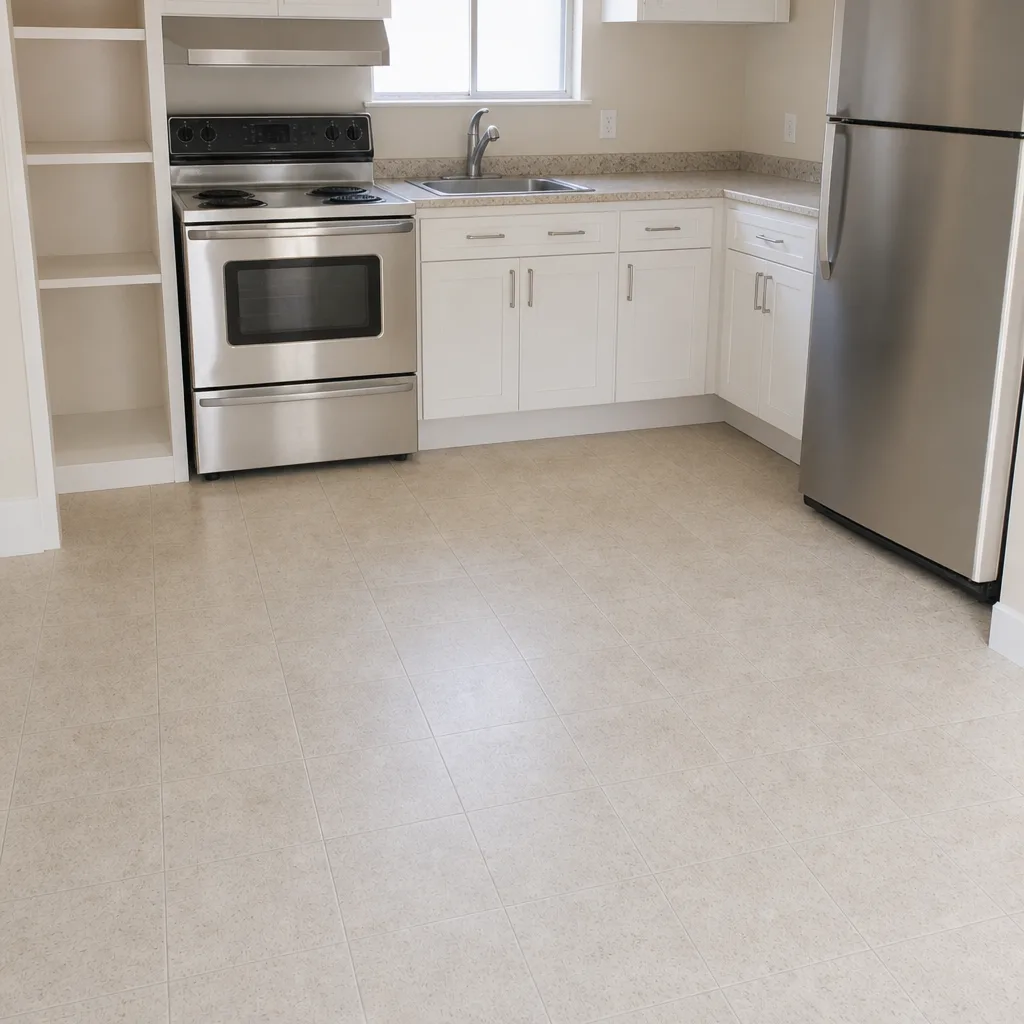
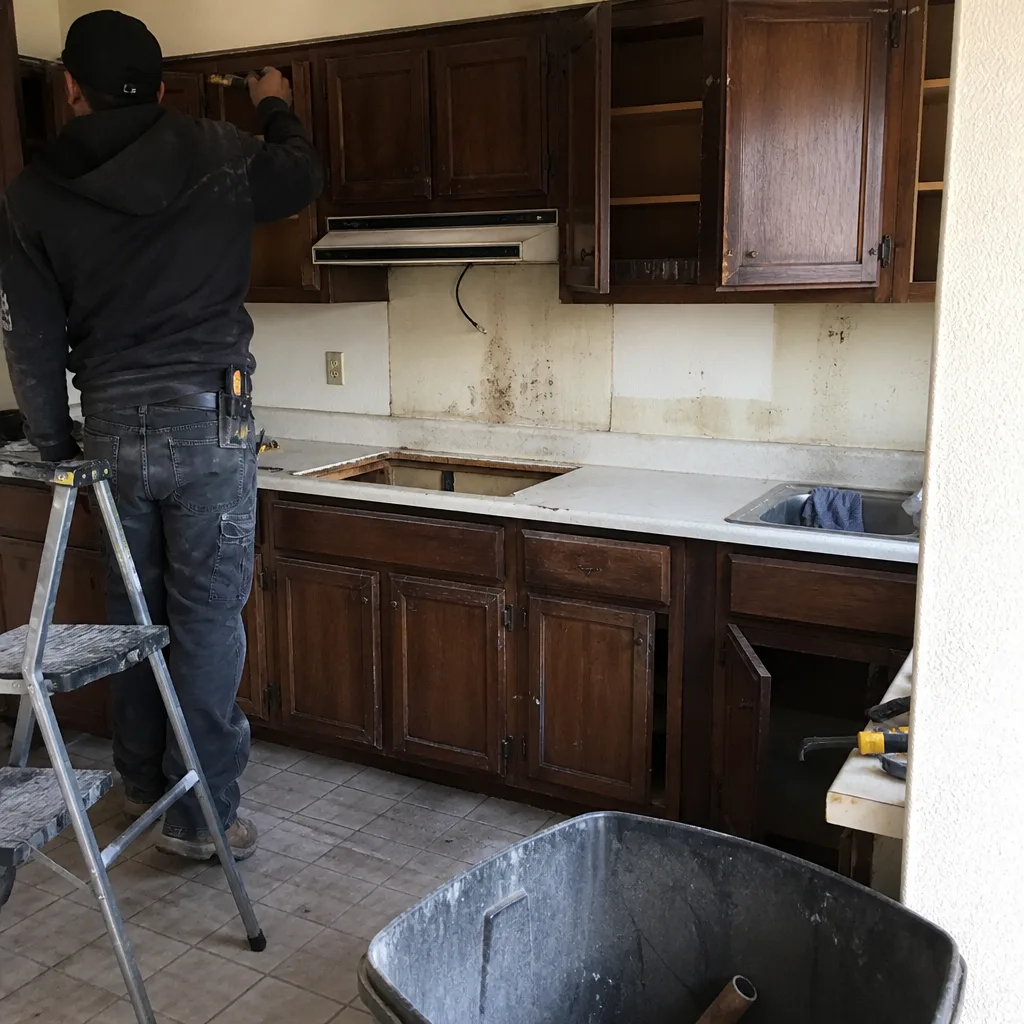
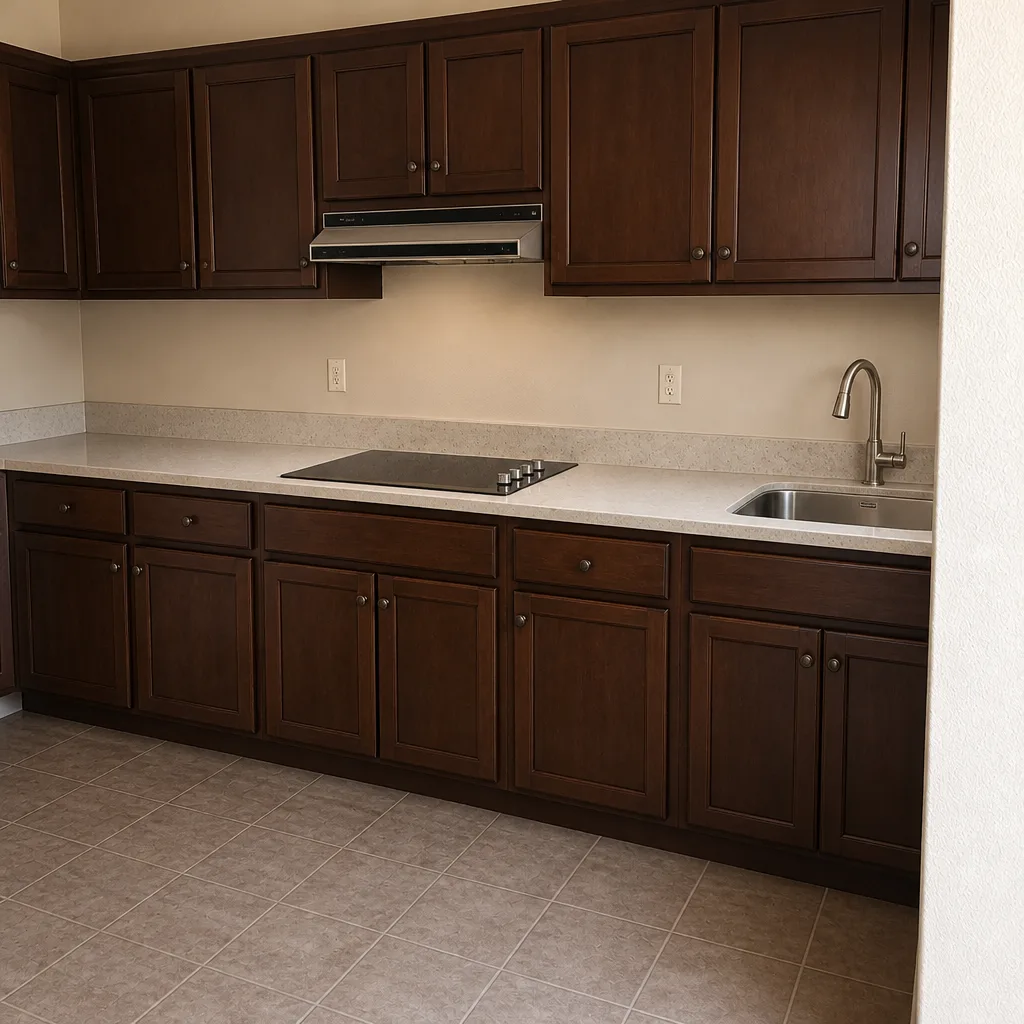
See the difference
 Before
 After
 Before
 After
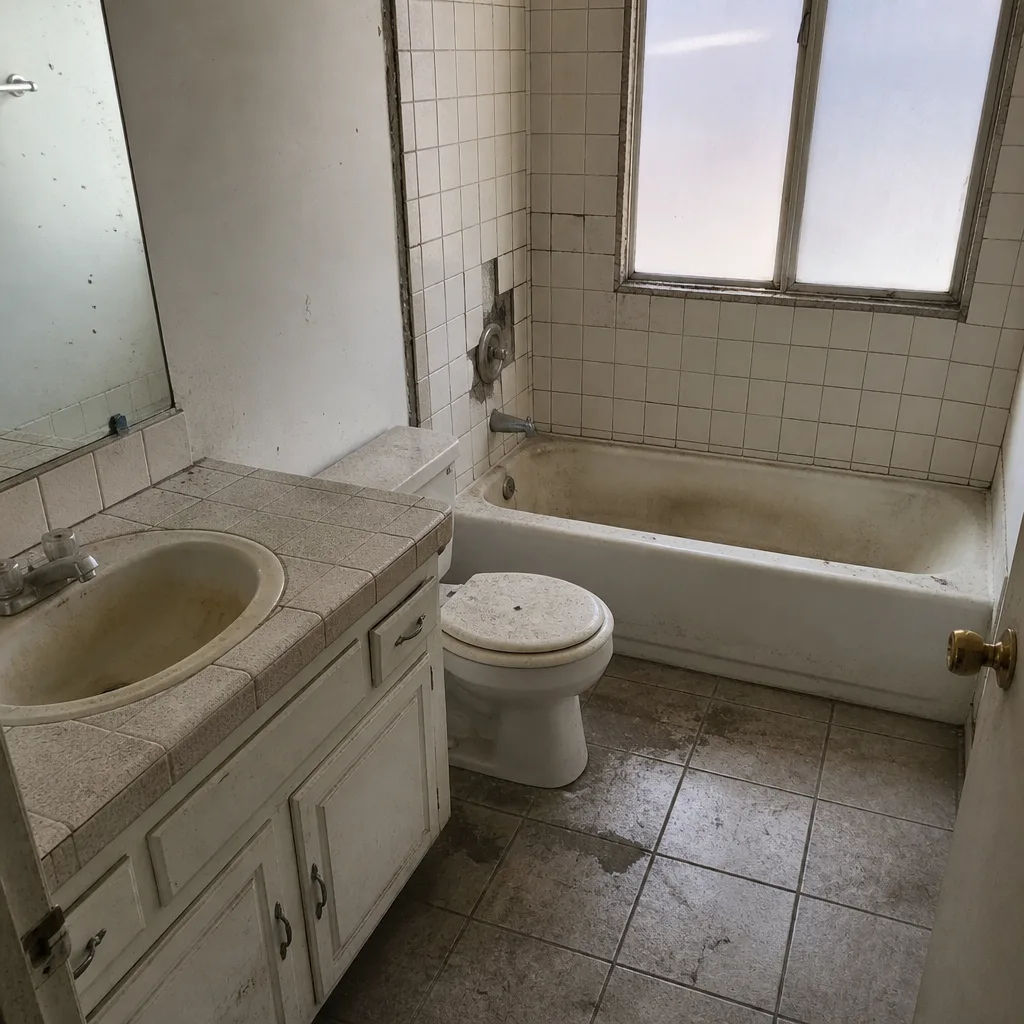 Before
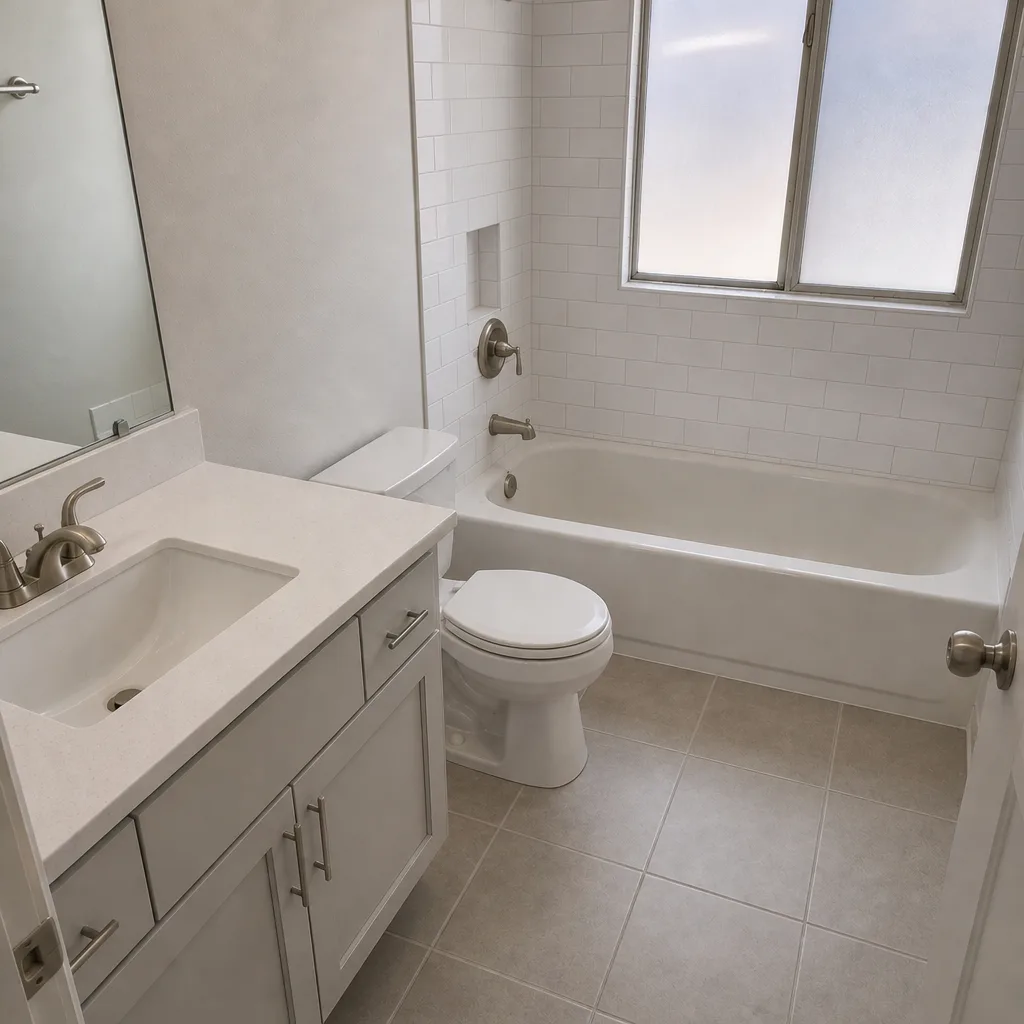 After
When to Call a Professional
Some jobs belong to a licensed contractor, not a Saturday. If your project involves moving or removing a load-bearing wall, any electrical panel work, gas line modifications, roof work above the first story, or a plumbing rough-in, a trained and licensed professional needs to run it. Nevada licensing exists for a reason: these are the categories where mistakes are expensive to correct and dangerous to live with. A permit pulled through unincorporated Clark County also protects you at resale, because a future buyer’s inspector will ask. If your project is a full kitchen or whole-home remodel with structural or systems work, call a licensed contractor before you buy materials. Bradford Remodeling Co Whitney offers free estimates in Whitney; call (833) 620-4908 to schedule yours.
Frequently Asked Questions
Get the license number in writing, then look it up on the Nevada State Contractors Board’s public license search. Confirm the status is active, the license is in the name of the business on your contract, and the classification covers your project type. For Whitney jobs, also ask whether the contractor has pulled permits through unincorporated Clark County before. Call (833) 620-4908 if you’d like to see how we put this in writing before work starts.
A good bid tells you nearly everything, because it’s broken into line items for labor, materials, and phases. If a bid gives you one total number, it doesn’t tell you enough to compare it to anything. As a working rule for Whitney, a kitchen remodel with mid-grade custom cabinetry and engineered stone falls somewhere in the $40,000 to $85,000 range for a typical footprint, and where you land inside that band depends entirely on the material tier and whether scope items like electrical and cabinet hardware are in or out. A written line-item price is what makes that number enforceable. Call (833) 620-4908 for a free written estimate.
It shouldn’t if the scope was written properly, and if the contractor included a change-order process. Prices move for three reasons: hidden conditions discovered behind walls, allowances where the material came in over budget, or owner-directed changes. All three should be handled by a signed change order with a written price before the work happens, not billed after. If the contractor won’t put the change-order process in writing, treat the price as an estimate, not a quote. We’re glad to walk through how a locked scope works; call (833) 620-4908 for a free estimate.
Yes, and small jobs are where they’re most often skipped. A lien waiver proves the contractor or subcontractor has been paid and won’t file a lien on your property. Even a $6,000 bathroom refresh can be liened by a supplier if the contractor didn’t pay them. Request a conditional waiver with every payment and a final unconditional waiver at close. It’s a standard, non-awkward request in the trade, and a professional contractor will have them ready.
A written guarantee has a specific term in days, a defined remedy, and a signature. A verbal one has none of those. Our 365-Day Done Right Promise covers completed work for 365 days; if the work fails inside that window, we return and correct it at no charge. When you’re evaluating other contractors in Whitney, ask for the same three specifics: how many days, what gets covered, and what the remedy is. If they can’t answer, the guarantee doesn’t exist. Call (833) 620-4908 to schedule a free estimate.
A bath refresh runs about 3 to 6 weeks; a full kitchen typically 8 to 12 weeks; a whole-home remodel 4 to 8 months. Whitney adds two things most timelines don’t account for: Clark County permit review and, during July through September, monsoon-season weather days. Get a working-day schedule in the bid, not a calendar estimate, and ask the contractor how the schedule handles permit timing. If you’d like a realistic timeline for your project, call (833) 620-4908 and we’ll price a written scope before we start.
The Bottom Line
The best protection against a bad contractor in Whitney isn’t a longer reference list, it’s a tighter bid document. Write your scope before you call anyone, hand the same scope to every bidder, verify the Nevada license and the Clark County permit path, replace allowances with firm numbers, and require a signed lien waiver with every payment. Then demand a written guarantee with a number of days and a remedy, because that’s the difference between a promise and a contract. The contractor who answers those requests in writing is the one worth hiring. Bradford Remodeling Co Whitney offers free written estimates to homeowners across Whitney; call (833) 620-4908 to schedule yours.
Written by the team at Bradford Remodeling Co Whitney.